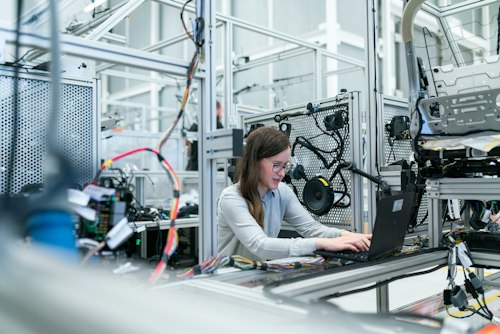
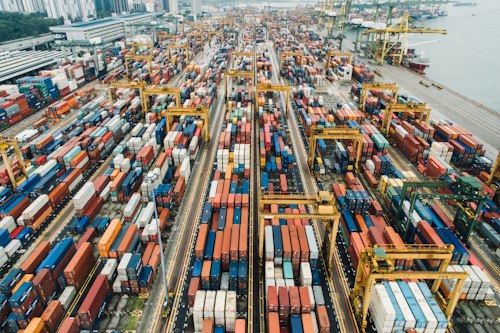
Erthum builds the trust infrastructure for sustainable commerce — where every asset, transaction, and physical condition is verifiable, not assumed. That verified condition becomes the foundation for what comes next: tokenized value, financing, and insurance, all priced on what's actually true rather than what's claimed. Cognisphere is the first proof — a live condition score for physical assets, built from sensor data, maintenance history, and outcomes that actually happened.
Most platforms describe sustainability and asset integrity in language — certifications, pledges, dashboards built on estimates. Erthum starts from the machine itself: what it's actually doing, what's actually been done to maintain it, and what actually happened when something went wrong.
Cognisphere is where that thesis becomes a product: a single, auditable condition score, recalculated continuously from sensor telemetry, maintenance records, and verified outcomes — not engineering estimates dressed up as risk models.
Sensor telemetry, CMMS work orders, and verified mission outcomes — not self-reported condition.
A single PACS score and grade band per asset, recomputed continuously, with every component traceable.
Every score snapshot is hashed and anchored on-chain — the record can't be quietly rewritten later.
Once condition, value, and coverage are real for one machine, the same record becomes the basis for trust between parties who've never met — a buyer, a lender, an insurer, a regulator, all looking at the same verifiable history instead of four different claims about it. That's the infrastructure layer Erthum is building toward: commerce that doesn't require trusting the seller, because the asset already speaks for itself.
Tokenized real-world assets are projected to reach $9.4 trillion by 2030, up from roughly $0.6 trillion today — a 53% CAGR. (Ripple / Boston Consulting Group, 2025)